
 by
by 
Since science has proven that operators have choices in their handwashing protocols, naming those alternatives helps communication, improves memorability, promotes ownership, increases its motivational value and converts the complex into common sense.
These proposed names recognize industry practices and evidence-based options. Any hand treatment is expected to have an effect, though effectiveness varies. The references cited cover proven protocols with properly implemented executions and show resulting pathogen reduction results. This approach invites all stakeholders (e.g., Risk Management and Finance) to join Food Safety in aligning protocols with the owner’s risk tolerance.
Regulatory professionals may use these names but more likely will favor those under their control. Some are already used in research circles, backed by science.
Where plumbed water is available:
The Sing Happy Birthday handwash
This methodology covers the basic actions: wet/pre-rinse hands, apply soap, scrub for 20 seconds while singing “Happy Birthday” twice, rinse, and dry. It focuses on scrub time rather than coverage. The Scrubber 10 is recommended as an upgrade in effectiveness and time saving.
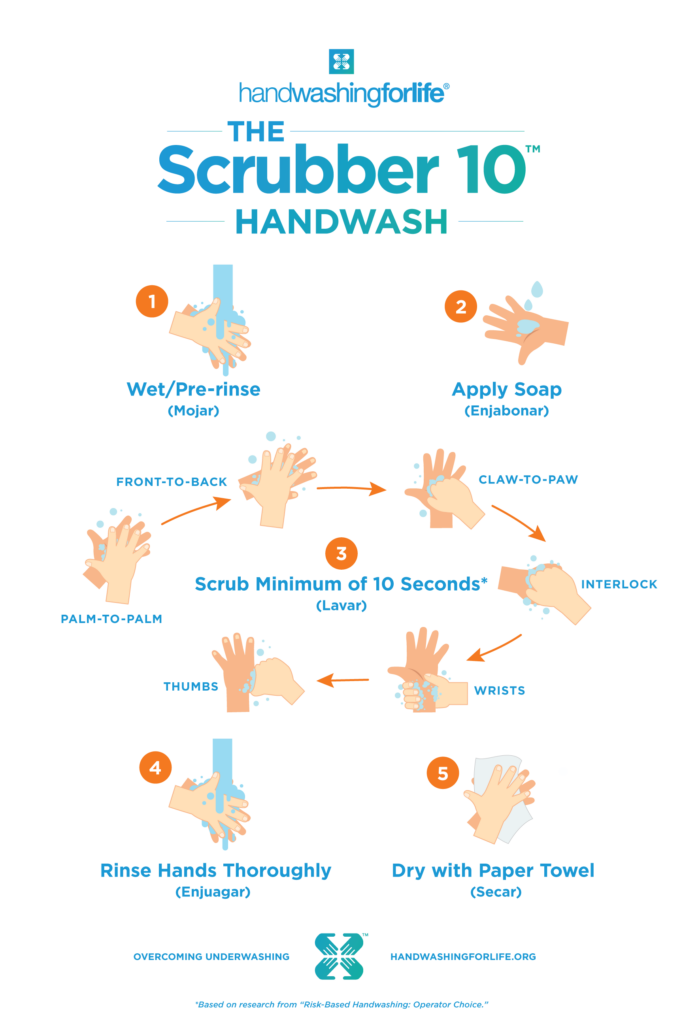
The Scrubber 10™ handwash
This evidence-based system replaces the Sing Happy Birthday handwash, emphasizing the importance of faster paced hand movements and friction in approximately 10 seconds of scrub time. The supporting research proves that hand coverage is more important than time.
Note: Manuscript accepted by Journal of Food Protection, December 2025, is currently in the publication process. View journal pre-press on Science Direct.
The Scrubber 10 Pro™
This method improves the performance of the Scrubber 10 by adding a post-wash process. A double dose of alcohol-based hand sanitizer (ABHS) is applied, scrubbed and wiped dry with a paper towel. This protocol potentially offers the best protection when concerned about Norovirus with its low infectious dose.
Where plumbed water is unavailable:
The SaniScrub™ handwash
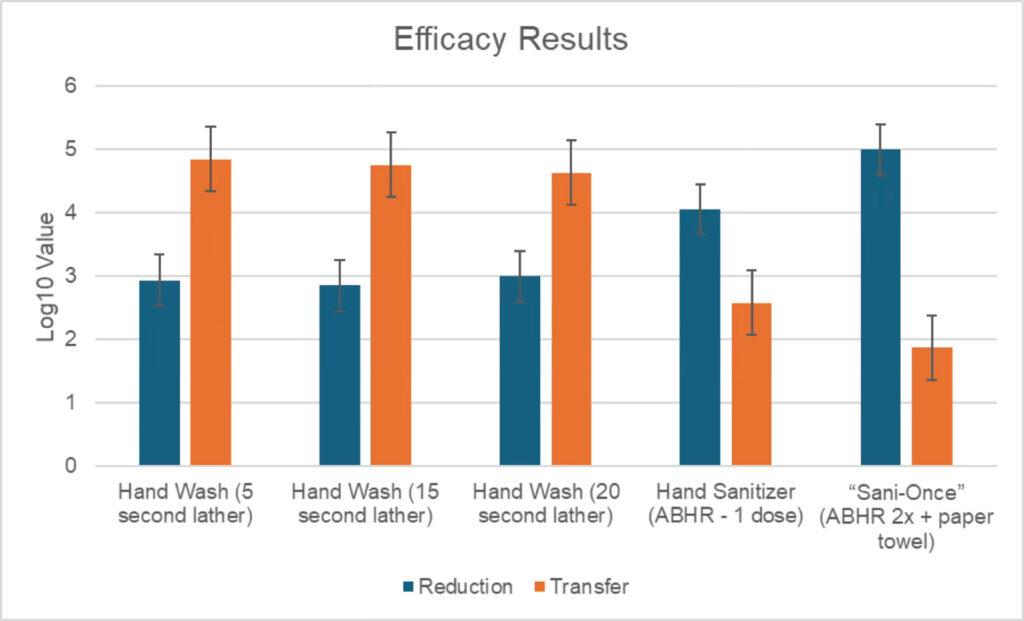
This process simply involves using ABHS, focusing on full-hand coverage with the same motions used in a traditional handwash, utilizing friction to aid in effectiveness. See graphic comparison to soap-water washing.
Read research on SaniTwice from 2010: A Novel Approach to Hand Hygiene for Reducing Bacterial Contamination on Hands When Soap and Water Are Unavailable.
The SaniOnce™ handwash
This choice emphasizes simplicity and convenience as factors that improve usage. Apply a double dose of ABHS, rub into hands with the prescribed technique, and dry your hands with a clean paper towel. It also offers a level of effectiveness that is superior to the Sing Happy Birthday handwash for bacteria and likely includes Norovirus control.
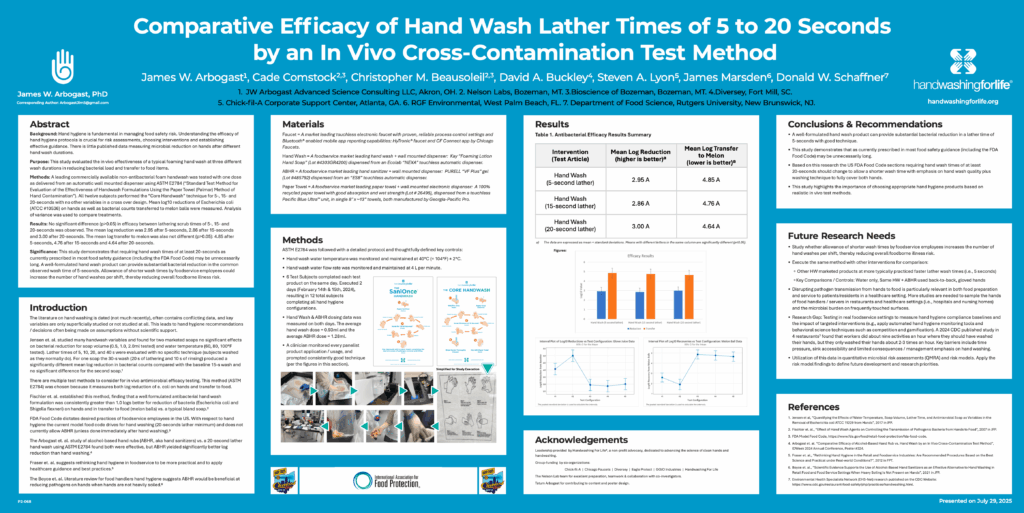
Download poster (66mb PDF file).
Note: Manuscript accepted by Journal of Food Protection, December 2025, is currently in the publication process. View journal pre-press on Science Direct.
TheSaniTwice® handwash
This SaniTwice alternative offers an extra margin of safety over the simpler SaniOnce by adding a second ABHS application. This version has been in use for over 15 years at the Clark County School District to serve food safely during power and water outages in Clark County, Nevada. Originally created for our USA desert-deployed military. The Journal of Food Protection published research in 2010 titled: “SaniTwice: A Novel Approach to Hand Hygiene for Reducing Bacterial Contamination on Hands When Soap and Water Are Unavailable”.
The Mobile Water™ handwash
Waterless situations are currently guided by the FDA’s Model Food Code. The process features a mobile vessel of potable water, hand soap, and paper towels for hand drying. Its performance is compromised by the trickle of water available for thorough rinsing, raising concerns about surfactant residue on skin, causing a severe skin irritation. Secondly, the plastic water spigots are easily contaminated and are almost impossible to clean effectively for pathogens and biofilm. The convenient and clean, no-touch SaniOnce protocol is recommended as a replacement for the Mobile Water method.
